200+ Engineering Projects Supported - 1 European Patent Granted

--

logo monitor the planet

MONITOR THE PLANET

GEOSPATIAL INNOVATION COMPANY

Topographic Surveying for the Zagonara Archaeological Site

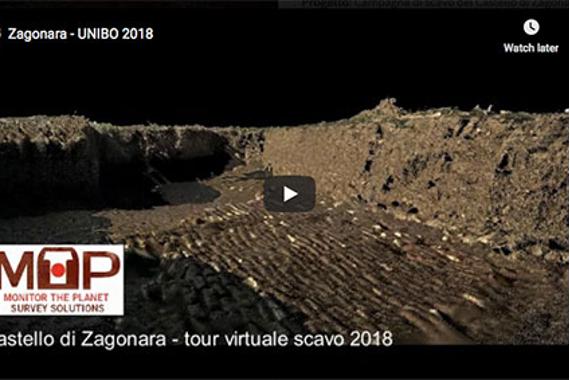
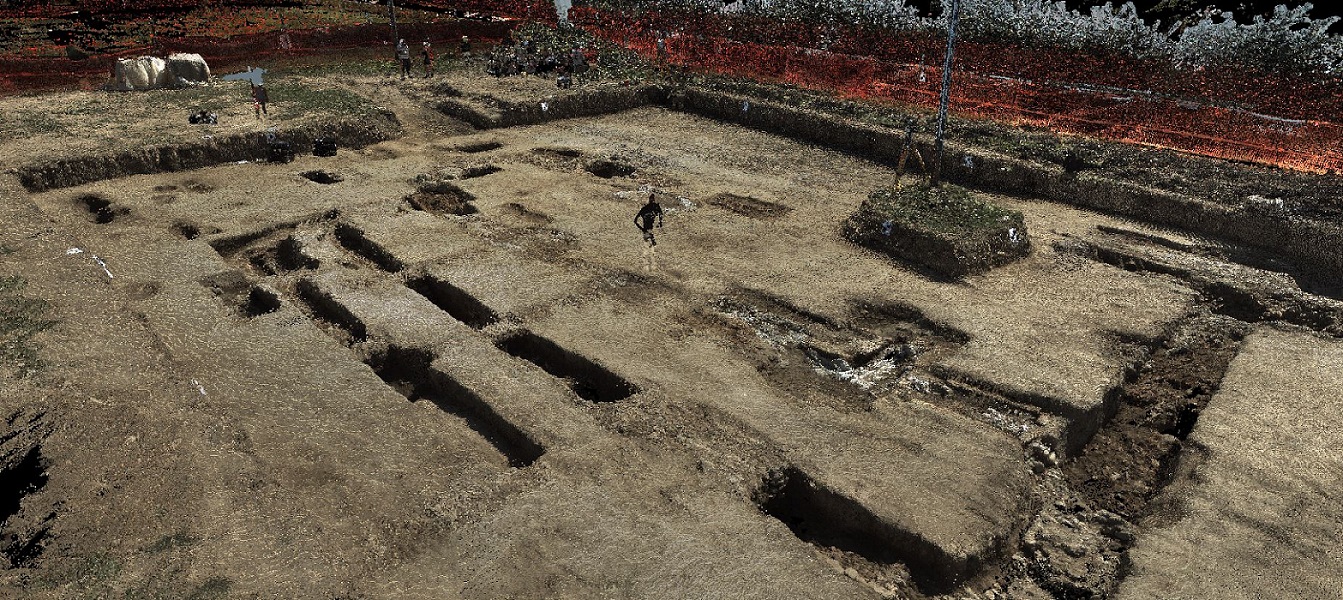
3D surveys using Laser Scanner and GPS for the georeferenced documentation of the Zagonara Castle excavations, in collaboration with the University of Bologna.

06 November 2023
The geometric and spatial documentation of an archaeological site is an essential element to ensure scientific rigor in research and the preservation of historical heritage. In the case of Zagonara Castle, in the municipality of Lugo (RA), the challenge was to provide a three-dimensional and georeferenced restoration of a complex stratigraphic context, constantly evolving season after season. Zagonara Castle is at the heart of the “Bassa Romandiola” project, a landscape archaeology program coordinated by the Department of History and Cultures (DiSCi) of the University of Bologna, under the direction of Professors Andrea Augenti and Marco Cavalazzi. The project investigates the evolution of rural settlement in the Ravenna area from Late Antiquity to the Middle Ages.
For further technical details, please consult our section on topographic assistance. The value of topographic assistance in the archaeological field:
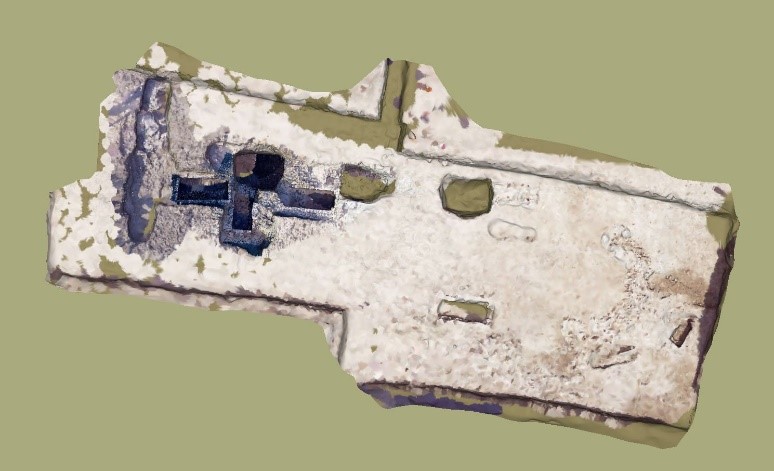
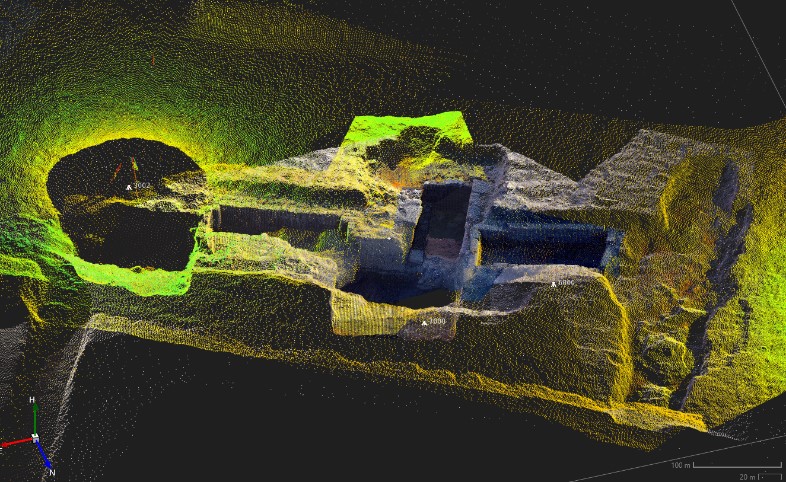
  • Stratigraphic documentation: Each excavation phase is acquired and rendered in 3D, creating a progressive digital archive of archaeological evidence.
  • Diachronic comparison: The georeferenced model allows for the overlay of surveys from successive campaigns, highlighting transformations and relationships between structures.
  • Research support: Metric data directly feeds the university project's GIS systems, integrating with archaeobotanical and geophysical analyses.
Technical Details of the Activity
  • Project: Zagonara Castle Excavation Campaign – “Bassa Romandiola” Project
  • Client: DiSCi Department, University of Bologna
  • Location: Zagonara, municipality of Lugo (RA)
  • Equipment used: 3D Laser Scanner for the acquisition of excavation surfaces and masonry structures, integrated with GPS surveying for georeferencing within the national coordinate system.
  • Output: Point clouds, textured meshes, and metric orthophotos.
  • Scientific collaboration: The work was carried out under the agreement between DiSCi, the Municipality of Lugo, and the Committee for Cultural Heritage of Lugo.